Llama is an open-weight model, so there is no single "top-up card." After Meta retired the Llama API public preview on July 6, 2026, the account system built around api.llama.com no longer provides inference either. Saying "top up a Llama API account" today may actually mean paying a cloud bill, buying prepaid credit on an inference platform, adding an RMB balance to a China-based gateway, or paying rent to a GPU provider.
The four routes differ in payee, how funds arrive, invoices, and refund rules. This article breaks them down by route and provides a pre-purchase checklist for enterprise procurement. For specific amounts, exchange rates, and invoicing policies, follow each platform's page; this article deliberately avoids fixed figures.
Note: Llama is a trademark of Meta Platforms, Inc. This article is a technical introduction only and implies no affiliation, agency, or partnership with Meta. Platform prices, balances, and invoicing policies change, so verify the original pages before paying.
1. First confirm who you are paying
| Route | Payee | How funds arrive | Invoice issuer | Refund rules |
|---|---|---|---|---|
| Cloud provider | AWS, Azure, Google Cloud, and similar | Account billing or prepaid credits | The cloud provider | Per contract and credit terms |
| Specialized inference platform | Together AI, Fireworks, DeepInfra, and similar | Prepaid balance or postpaid billing | The platform operator | Check unused-balance terms |
| China-based aggregation gateway | ZSQH AI Gateway and similar | RMB account balance | The gateway operator | Check cash versus bonus balance rules |
| Self-hosting | GPU cloud or data center | Compute hours, not API balance | The GPU supplier | Per compute contract |
Read this table before deciding whether the word "top-up" even applies. Cloud providers mostly bill postpaid, self-hosting has no API balance at all, and only gateways and some inference platforms offer true prepaid top-ups.
2. The "official Meta Llama API top-up" entry point no longer exists
Meta's Llama API public preview was retired on July 6, 2026, and the old endpoint returns a service-termination notice. Meta's announcement stated that model weights were unaffected and remain available from the official download pages and Hugging Face, and suggested that developers migrate to third-party providers that support Llama.
That means two things. First, any page claiming it can "top up an official Meta Llama API account" deserves suspicion, especially if it asks for account passwords, verification codes, or transfers to a personal account. Second, a model-weight download page is not an API account page; downloading a model does not grant hosted call quota.
If you need hosted calls, register through the formal entry point of a cloud provider, specialized inference platform, or aggregation gateway. Do not pay through "top-up agent" links in search-advertising slots.
3. Cloud providers: no balance concept, just a bill
Platforms such as AWS Bedrock, Azure AI Foundry, and Google Cloud Vertex AI offer Llama models, but their settlement is usually a monthly bill against a payment method, not a balance that is topped up and then deducted. In some cases you can buy prepaid credits, or commit spend through an enterprise agreement or marketplace purchase.
For enterprise procurement, confirm: whether the contracting entity and the invoicing entity match, whether purchase orders are supported, invoice types and tax rates, whether support plans are charged separately, and whether cross-region calls create extra network fees. On the technical side, confirm the target model is available in the required region and that quota is sufficient.
The advantage of a cloud bill is a complete audit chain, which suits teams with existing cloud contracts and compliance processes. The cost is a long onboarding cycle and many billing line items; tag calls so costs can be allocated by project.
4. Specialized inference platforms: prepaid credit and auto-reload
Platforms such as Together AI, Fireworks, DeepInfra, Novita, and Parasail usually support prepaid credit cards and may also offer postpaid billing or dedicated instances. Before topping up, focus on five things: the minimum top-up amount, whether the balance expires, whether auto-reload is on by default, the auto-reload trigger threshold, and whether unused balance is refundable.
Auto-reload is the item most likely to create unexpected spend. Turn it off or set a low trigger threshold, and enable balance alerts. When a team shares an account, split keys by project so one experiment cannot consume the whole month's budget.
After topping up, validate the key, balance, and model ID with one minimal request:
export LLAMA_API_KEY="your-key"
curl -s https://your-provider.example/v1/chat/completions \
  -H "Authorization: Bearer $LLAMA_API_KEY" \
  -H "Content-Type: application/json" \
  -d '{"model":"<model-id>","messages":[{"role":"user","content":"ping"}],"max_tokens":16}'
A normal response means authentication and balance are usable. A 401 points to the key first. A 402 or insufficient-balance message points to whether the top-up has posted. A 404 is usually the model ID or the API path.
5. China-based aggregation gateways: RMB top-ups and a unified balance
Teams without a stable overseas payment method, or whose finance department requires RMB invoices, can choose an OpenAI-compatible aggregation gateway. Register, top up the account balance in RMB, and use the same account's key to call multiple models, including Llama.
When topping up, confirm four things: which line the settlement exchange rate is written on, whether a channel or service fee is charged separately, the deduction order between bonus balance and cash balance, and whether the balance has an expiry date. Bonus credit usually cannot be refunded or invoiced, so track it separately for budgeting.
A gateway's value is not just payment convenience; it also provides a unified usage view and multi-model switching. But confirm upstream stability, incident handling, and data terms as well. You can sign up for ZSQH AI Gateway, top up a small amount, run one request, and then split keys by project. Specific prices and billing rules are on the model pricing page.
6. Invoices, refunds, and a procurement checklist
- Verify that the contracting, receiving, and invoicing entities match, so the payment can be booked correctly.
- Confirm invoice type, tax rate, issuance time, and minimum invoicing amount; for special invoices, confirm the required documents.
- Ask separately about refund rules and timelines for unused cash balance, consumed amounts, and bonus balance.
- Confirm whether auto-reload is on by default, what the trigger threshold is, and whether it can be disabled.
- Confirm how price changes, model retirement, and service interruptions are communicated, and what compensation terms apply.
- Confirm log retention, whether data is used for training, where data is stored, and cross-border transfer arrangements.
- Prepare supplier onboarding materials: business license, contract, purchase order, payment approval, and acceptance form.
The checklist looks like administrative process, but it determines whether you can hold anyone accountable when something goes wrong. In particular, ask "can the balance be refunded" and "what happens if the model is retired" before launch, not after.
7. Security and reconciliation before and after top-up
Before paying, verify the domain and the recipient name. Do not transfer to personal accounts, and do not give account passwords or SMS verification codes to any "top-up agent." Enterprise payments should follow the corporate process, keeping the contract, order number, payment receipt, and invoice.
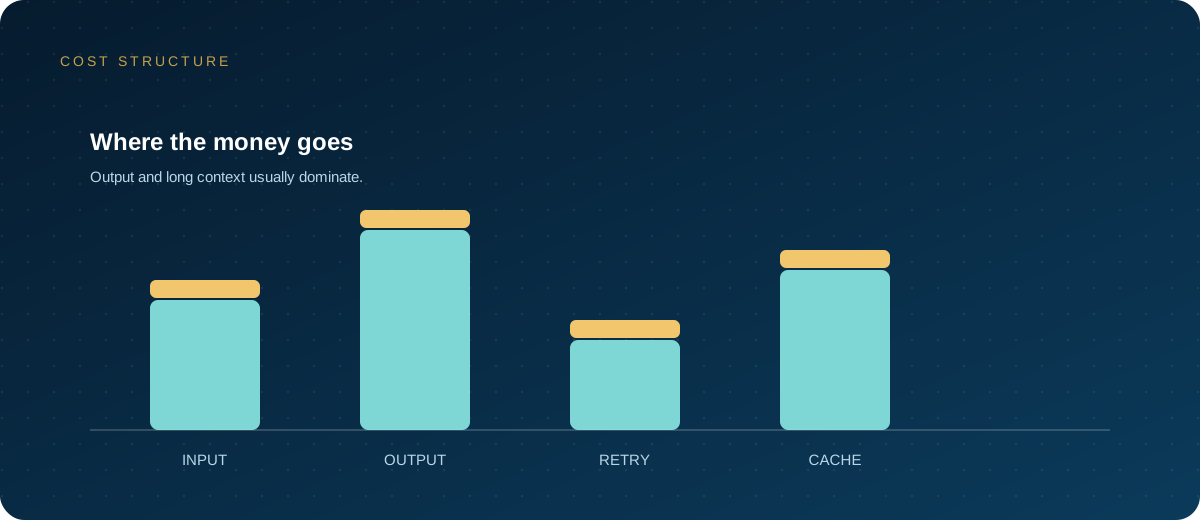
In use, keep keys only in server-side environment variables, never in the frontend or Git. Use one key per project, set budget caps and balance alerts, and revoke keys promptly when staff leave or a project ends. Review the usage ranking weekly, reconcile with request IDs monthly, and when discrepancies are large, check retries and long-context requests first.
Frequently asked questions
Is there still an official Meta Llama API top-up entry point?
No. Meta's Llama API public preview was retired on July 6, 2026, and the old endpoint no longer serves inference. Model weights can still be downloaded; hosted calls must go through third-party platforms.
Can cloud credits be used across platforms?
Generally no. Cloud credits and bills are usually tied to that cloud account and region, and specialized inference platform balances are usable only on their own platform. Confirm how the balance will be handled before migrating.
What is the difference between a gateway balance and cloud credits?
A gateway balance is usually an RMB prepayment deducted according to converted token consumption, and it can support RMB invoicing. Cloud credits are mostly applied to specified services on that cloud and are subject to region, expiry, and contract limits.
Can a top-up be refunded?
It depends on the platform's terms. Unused cash balance, consumed amounts, and bonus balance follow different rules, and some platforms do not support refunds. Before paying, put refund conditions into the contract or save a screenshot of the page.
What materials does enterprise procurement require?
Usually a business license, supplier onboarding form, contract, purchase order, payment approval, invoicing information, and acceptance form. If cross-border data transfer or personal information is involved, add data terms and a security assessment.
Next steps
Confirm the integration route first, then decide who gets paid. Cloud providers take contract billing, inference platforms sell prepaid credit, China-based gateways accept RMB balance top-ups, and self-hosting pays for compute. If you need RMB top-ups, a unified balance, and multi-model management, start with sign-up. Specific prices and billing rules are on the model pricing page.
Related reading: