When enterprises procure an OCR API, it is tempting to start by comparing unit prices. What actually determines whether the project succeeds is four things: whether the page-count definition is consistent, whether the data can pass internal review, whether accuracy can be accepted, and whether there is a fallback when something fails. OCR quotes are often calculated per page, per image, per call, or per token, and unit prices are not comparable when the definitions differ.
The checklist below follows the procurement process: usage estimation, billing and invoicing, a privacy questionnaire, accuracy sampling, human review, permissions, backup channels, and pilot acceptance. Specific prices and available models are governed by the model pricing page and the signed contract; this article does not hard-code numbers.
Note: The OCR products, models, and trademarks mentioned in this article belong to their respective owners and are used only for technical procurement guidance. Service terms, prices, and accuracy figures may change; the signed contract and official documentation govern.
1. Calculate pages before discussing price
The word "page" in procurement documents must be defined first. There are four common definitions: one PDF file counts as one page, a PDF is split into images and billed per image, billing is per API call, or only successfully recognized pages are billed. The treatment of duplex scans, attachments, multi-image uploads, and blank pages must also be written down.
| Metric | Estimation method | Use in the procurement document |
|---|---|---|
| Monthly pages processed | Document volume over the last three months × growth factor | Determine the plan and budget ceiling |
| Peak pages per minute | Peak-hour pages ÷ 60, multiplied by a safety factor | Confirm concurrency and rate limits |
| Images per page | Duplex scans, attachments, multi-image uploads | Standardize the billing definition of a "page" |
| Failures and retries | Pilot failure rate × retry count | Reserve quota and avoid overage |
| Human review share | Share of low-confidence fields | Estimate review staffing and hours |
Do not report only an annual total. OCR load usually has obvious peaks, and month-end, quarter-end, and tax season may bring concentrated uploads. Writing peak concurrency and backlog capacity into acceptance criteria is closer to real production than discussing average monthly pages alone.
2. Billing, contracts, and invoices
After receiving a quote, verify each of the following rather than asking only "how much per page":
- Whether the billing unit is pages, images, calls, or tokens, and whether printed text and complex layouts are priced differently.
- Whether there are tiered prices, minimum commitments, committed volume, and overage rates.
- Whether failed requests, timeout retries, blank pages, and duplicate uploads are billed.
- The settlement cycle and reconciliation basis: call logs, successful pages, or bill summaries.
- The contracting entity, settlement currency, payment method, and refund rules.
- Invoice types and invoicing cycle, including whether a special VAT invoice can be issued.
For enterprise payment, use a corporate account and retain the contract, order, payment receipt, and invoice. The quote should state its validity period; for a three-year budget, prepare for price increases.
3. Data privacy: turn the questions into a questionnaire
OCR usually processes contracts, invoices, ID documents, and customer records, so privacy review cannot rely on verbal assurances. Send the following ten questions to the vendor and require written answers on file:
- How long are uploaded images and recognition results retained, and where are they stored?
- Is data used for model training or product improvement, and can this be disabled?
- Is a specific storage region supported, and will data be transferred across borders?
- What encryption is used in transit and at rest?
- How are deletion requests submitted, how quickly do they take effect, and is there a receipt?
- Which subprocessors are involved, and will changes be notified in advance?
- Can a data processing agreement (DPA) be signed?
- Can security audit reports or responses to a security questionnaire be provided?
- What are the notification timeframe and liability boundaries for security incidents?
- Is employee access to customer data subject to approval and audit logs?
Multimodal OCR often requires uploading the whole image, and traditional OCR endpoints may also retain the original image for troubleshooting. Confirm the retention policy for both approaches. For sensitive material such as ID cards, bank cards, and medical records, prioritize local deployment, de-identification before recognition, or a paid service with clear terms that has completed legal review.
4. Accuracy: do not look at a single percentage
"Accuracy" has no universal denominator. High character accuracy does not mean fields can be posted directly into accounting, and high whole-document accuracy does not mean handwriting and tables are problem-free. At procurement, break accuracy into at least four metrics:
- Character accuracy: how closely the recognized text matches ground truth.
- Field accuracy: whether key fields such as invoice number, amount, and date are completely correct.
- Whole-document pass rate: the share of documents that can enter downstream systems without manual correction.
- Structured-output success rate: whether the returned JSON can be parsed against the agreed schema.
Require statistics broken down by document type, printed versus handwritten, scan quality, and language. Vendor test reports are reference material only; ultimately you must run a pilot on your own samples, covering the main document types and the worst quality, not just demo images.
5. Human review and exception handling
Even the best OCR produces low-confidence results, so the procurement plan must include human review. Common practice: the model returns confidence scores, and fields below the threshold enter a review queue; validation rules are added for critical fields such as amounts, tax IDs, and document numbers, for example total checks and format checks; high-value documents use double entry or sampling.
Review is not failure; it is part of the business design. Estimate the review share and labor hours during procurement and include them in total cost, rather than discovering a staffing shortfall after launch. Keep the original image, recognition result, modification history, and operator to form a traceable audit chain.
6. Permissions, auditing, and backup channels
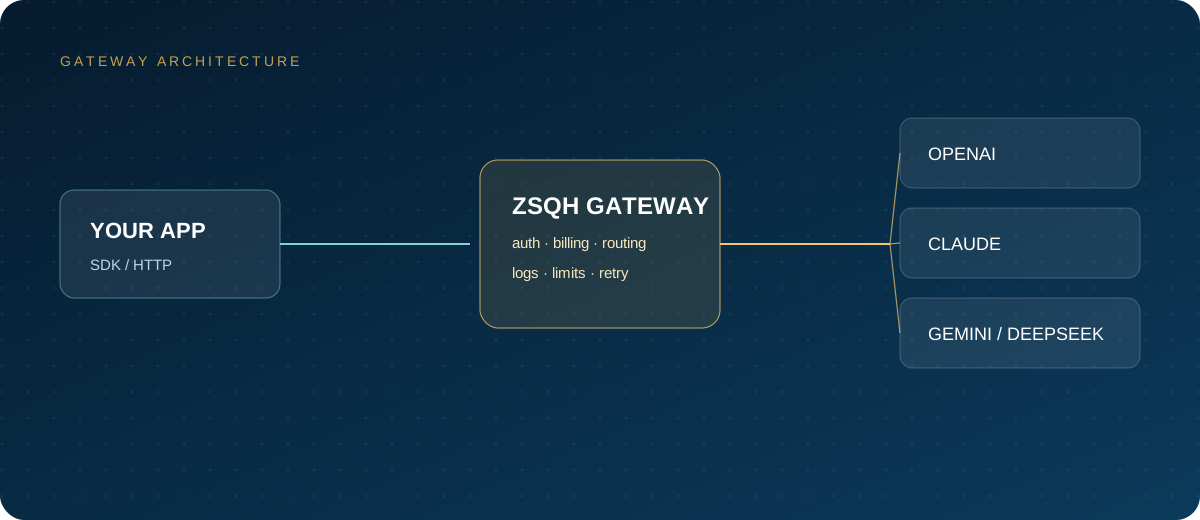
Enterprise integration should split keys by project, isolate production from testing, and follow least privilege; store keys in server-side environment variables or a secrets manager, rotate them regularly, and set budget and usage alerts. Call logs should retain at least the request ID, time, document identifier, elapsed time, and status for reconciliation and troubleshooting.
Backup channels should also be designed in advance: keep a second vendor for core documents, or use local open-source OCR for degradation; put batch jobs into a queue and retry failures with backoff; trip a circuit breaker and route to human review after repeated failures, so incorrect results are not written into business systems. Below is a minimal calling example with a timeout:
import os
from openai import OpenAI

client = OpenAI(
    api_key=os.environ["ZSQH_API_KEY"],
    base_url="https://ai.zhongshangqihang.com/v1",
    timeout=30,
)

resp = client.chat.completions.create(
    model=os.environ["OCR_MODEL"],  # Model name follows the on-site model list
    messages=[{
        "role": "user",
        "content": [
            {"type": "text", "text": "Recognize the text in the image and output JSON by field"},
            {"type": "image_url", "image_url": {"url": "https://example.com/invoice.png"}},
        ],
    }],
)
print(resp.id)  # Record the request ID for reconciliation and troubleshooting
print(resp.choices[0].message.content)
7. Eight steps for pilot acceptance
- Sign a trial or confidentiality agreement specifying that samples are used only for this evaluation.
- Select 100–300 real pages covering the main document types and the worst scan quality.
- Label key fields manually, standardizing the labeling rules and the definition of "correct."
- Fix the model, version, and parameters, and retain request logs and request IDs.
- Calculate stratified field accuracy, whole-document pass rate, P95 latency, and failure rate.
- Set confidence thresholds and measure the human review share and actual labor hours.
- Run a rate-limit and failure drill to verify the backup channel and backlog handling.
- Archive the evaluation report, quote, data terms, contract, and invoice together before deciding on full rollout.
Acceptance criteria must be fixed before the pilot, not interpreted after the results arrive. Consider veto conditions, such as sensitive data failing retention requirements, key-field accuracy below the business floor, or no degradation plan during failures.
8. FAQ
When a PDF is billed per page, what exactly counts as a page?
Definitions differ between platforms: some count file pages, some split the PDF into images first, and some bill only successfully recognized pages. Whether blank pages, covers, attachments, and multi-image uploads are billed should be stated in the contract or order.
Can a vendor's advertised accuracy be trusted directly?
It is reference material only. Ask how the test sample was composed, how the metric is defined, and how it was calculated, then run a pilot on your own real documents. Marketing numbers usually come from ideal samples and may not match your actual documents.
Can data stay within the country?
It depends on the deployment model. Public cloud API data may be processed in other regions, while local deployment or open-source self-hosting can keep data in your own environment. Before procurement, confirm the storage and processing regions and cross-border transfer arrangements, and have legal and security teams review them.
Is it necessary to prepare two vendors?
Not necessarily, but a backup plan is needed. Dual vendors increase integration and maintenance cost; a more common approach is one primary vendor plus local open-source OCR or a second channel for degradation, with the switchover process rehearsed.
How large and how long should a pilot be?
There is no universal standard. Typically 100–300 pages covering the main scenarios, run for one to three weeks, with focus on stratified accuracy, review hours, and failure behavior. Samples that are too small or cover only clear documents produce overly optimistic conclusions.
Next steps
If your enterprise needs RMB payment, consolidated billing, and invoices across multiple models, you can register for the ZSQH AI Gateway, run a pilot on a small batch of documents, and then split keys and budgets by project. Model availability and prices are governed by the model pricing page.
Related reading: