Demand for OCR relay usually comes from three situations: access to overseas vision models is unreliable from mainland China, bills are scattered across several OCR vendors, or batch recognition needs a unified queue and retry layer. A relay lowers integration cost, but it also concentrates keys, data, billing, and availability into a new dependency.
This article covers the shapes a relay can take, batching and asynchronous processing, billing definitions, key risk, data privacy, and how to verify a service and migrate safely. Specific services and prices are subject to the model pricing page and the provider's terms.
Note: OpenAI, Claude, Gemini, Baidu AI Cloud, Tencent Cloud, Alibaba Cloud, and other names are trademarks of their respective owners; this article is for technical discussion only and implies no affiliation or agency relationship with those vendors. Cross-border data transfer, privacy protection, and payment settlement must comply with local laws and platform terms.
1. What an OCR relay actually relays
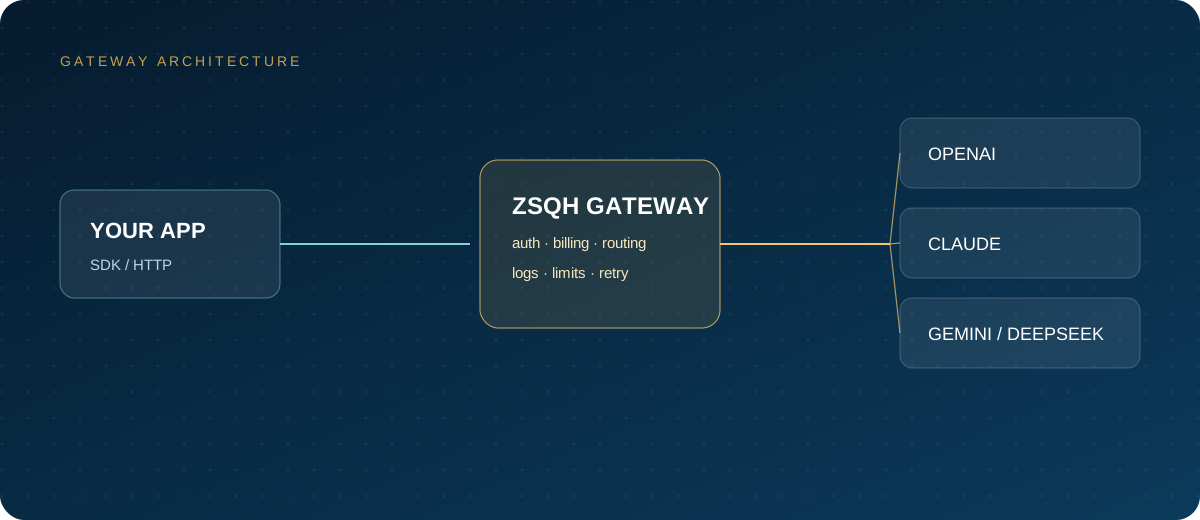
A relay or proxy does not produce OCR capability itself. It forwards requests to an upstream OCR vendor or vision model and returns the result. The value lies in the access layer: a unified endpoint and authentication, centralized key management, per-project quotas, usage and error records, and the ability to switch between upstreams.
Evaluate a relay on more than recognition; consider whether the chain is more controllable. Every extra hop adds a timeout point, a log, and a data processor. Teams without operations staff that need a unified entry point are good candidates for a relay; scenarios with extremely high latency and audit requirements are better served by self-hosting or direct connections.
2. Common forms and their boundaries
| Form | Access method | Suitable for | Main risks |
|---|---|---|---|
| Direct vendor connection | Open a vendor account directly | A single engine, stable usage, and an existing payment channel | Cross-border network and foreign-currency billing are your responsibility |
| Resale-style relay | Buy credit or share a key | Quick trials and small validation projects | Upstream and quota are opaque; service may be interrupted |
| Managed gateway | OpenAI-compatible entry with a console | Unified billing across models and team collaboration | Data terms and quota rules need item-by-item confirmation |
| Self-hosted proxy | Deploy your own reverse proxy or gateway | Fixed egress, auditing, deep customization | Servers, certificates, upgrades, and on-call cost |
A resale-style relay is closer to "buying credit on your behalf," so ask who owns the balance and how refunds work; a managed gateway is closer to "access-layer service," so focus on protocol compatibility, logging, quotas, and incident response.
3. Batch and async: do not force synchronous endpoints
A single image can go through a synchronous endpoint; hundreds or thousands of images, multi-page PDFs, or concentrated submissions will hit timeouts, exhausted connections, and retry storms. Batch recognition should separate "submit" from "fetch result":
- Build a pending list and compute a content hash for each image or PDF as an idempotency key.
- Split work according to endpoint limits: set thresholds separately for image size, pages per request, files per task, and concurrency.
- Submit through an asynchronous task endpoint and record task_id, submission time, status, and result location.
- Fetch results by polling or callback, with a sensible polling interval and maximum wait time.
- Download result files promptly; do not rely on result links that expire.
- Classify failures: retryable jobs go into a backoff queue, non-retryable ones into a manual queue.
- Reconcile each batch: success count, failure count, billed images, and records actually stored, followed by sample review.
The queue needs backpressure: when 429s increase, slow down consumption instead of retrying indefinitely. For multi-page PDFs, distinguish whole-document failure from single-page failure.
4. Billing transparency: per image, per page, or per token
OCR billing varies widely: traditional OCR often charges per image or per call, PDFs may be billed per page, and vision LLMs usually charge for tokens derived from input images plus output tokens; some services also offer monthly packages or tiered plans. Normalize the definitions before comparing prices.
Details to confirm with a relay service include:
- Whether failed requests are billed, and whether timeouts and 5xx responses count toward usage.
- Whether automatic retries are billed twice, and how backoff retries differ from manual reruns.
- Whether PDFs are billed per file or per page, and whether blank or low-quality pages count.
- Whether image compression or cropping affects the billed image count or token count.
- Whether failed or timed-out async jobs are refunded, and whether balances expire.
- Whether usage can be exported by project, key, and model, and whether bills reconcile with logs.
If any item is unclear, run a fixed batch test first. Do not rely on the advertised unit price alone, and do not subtract prices that use different billing definitions. Actual costs are governed by the model pricing page and the contract.
5. Key risk: the most overlooked single point in the relay layer
Relay keys often carry large quotas, so a leak can cause more damage than a direct account. Common risks: keys embedded in frontend or mobile app bundles, test keys that are never revoked, one key shared by every project, no quota ceiling, and keys left active after an employee leaves.
Basic measures: split keys by project and environment, set quotas and expiry dates, and bind an IP allowlist where possible; keep keys on the server only and let the frontend call your backend; alert on call volume, failure rate, and source IP; use separate keys for batch and online workloads.
Also ask about exit terms: what happens to the balance if the service stops, whether results can be exported, whether keys can be revoked immediately, and whether deletion is confirmed. Do not prepay for a long period just because of a discount.
6. Data privacy: images are more sensitive than text
OCR uploads may contain ID cards, business licenses, invoices, contracts, or medical records, so information density is high. Before signing, confirm at least: whether images are stored, where, and for how long; whether they are used for training; which downstream subcontractors are involved; how deletion requests take effect; whether transmission and storage are encrypted; and whether a data processing agreement can be signed.
You can reduce exposure technically: upload only cropped regions containing the target fields, mask unrelated personal information, use dedicated projects and keys for sensitive files, and set access permissions and retention periods on results. Whether cross-border transfer is allowed and what procedures apply should be assessed under the relevant regulations, with legal advice where necessary. A relay service should not be treated as a compliance solution by default; it is only one link in the chain.
7. Migration checklist
- Inventory endpoints, model names, image sizes, PDF page counts, peak concurrency, monthly call volume, and current bills.
- Prepare 50–100 real samples covering clear, blurry, tilted, handwritten, tabular, multi-column, and multi-page PDF cases.
- Run old and new systems in parallel on the same samples and compare character accuracy, field accuracy, structured-output success rate, and P95 latency.
- Reconcile billing on a fixed batch: log entries, successes, failures, and the invoice should agree.
- Test error paths: 401, 403, 404, 413, 429, 5xx, timeouts, and expired result links.
- Review the contract and data terms, confirming deletion mechanisms, subcontractors, and invoice types.
- Scale traffic in steps of 5%, 20%, and 50%, then switch fully, keeping the old path as a fallback.
- After two to four weeks of stable operation, revoke old keys, archive old results, and adjust monitoring thresholds.
Do not change both the recognition model and the parsing logic during migration; otherwise it becomes hard to isolate the source of a problem.
8. How to verify a relay service
First send one fixed test image through to confirm the response structure, usage fields, and error codes; then repeat the same image and observe whether latency and billing are consistent. The example uses an OpenAI-compatible vision request; model names and parameters follow the provider's documentation:
import os
import requests

base = os.environ["ZSQH_BASE_URL"].rstrip("/")
headers = {"Authorization": f"Bearer {os.environ['ZSQH_API_KEY']}"}

resp = requests.post(
    f"{base}/chat/completions",
    headers=headers,
    json={
        "model": os.environ["VISION_MODEL"],
        "messages": [{
            "role": "user",
            "content": [
                {"type": "text", "text": "Recognize all text in the image and output it in the original order."},
                {"type": "image_url", "image_url": {"url": "https://example.com/test.png"}},
            ],
        }],
    },
    timeout=90,
)
resp.raise_for_status()
data = resp.json()
print(data["choices"][0]["message"]["content"][:200])
print("usage:", data.get("usage"))
Beyond functionality, check non-functional indicators: three to seven days of observation at low traffic, the ratio of 429s and 5xx responses, ticket response time, whether billing details can be exported, and the invoicing cycle. It is also worth testing once with a wrong key and once with an over-limit request to confirm that error messages are clear and do not leak internal details. If you need a unified entry point and RMB settlement, you can create a test key at the ZSQH AI Gateway, validate with a small batch of images, and then migrate.
Related reading:
- OCR API Guide: Image to Text, Structured Extraction, and Selection
- What Is an API Relay? Selection, Pricing, and Compliance in 2026
- LLM API Proxy: Compliance and Billing
FAQ
What is the difference between an OCR API relay and buying the official interface directly?
A direct connection is provided by the vendor, so features and documentation stay in sync; a relay adds an access layer and wins on a unified entry point, RMB settlement, and centralized management, but adds a timeout point, a data processor, and another dependency. The choice depends on network, payment, operations, and compliance constraints.
Will a relay service store my images?
It depends on the architecture and terms, so there is no universal answer. Confirm whether images are stored, where, for how long, whether they are used for training, which subcontractors are involved, and how deletion requests are executed. For sensitive images, crop and mask them before uploading.
Should batch recognition use a synchronous or asynchronous endpoint?
A synchronous endpoint is fine for a small number of images; for large batches, multi-page PDFs, or concentrated submissions, prefer an asynchronous endpoint, separate submission from result retrieval, and record task_id, polling status, and result expiry.
Why does relay billing not match the vendor's bill?
Common reasons are different billing definitions: per image, per page, per request, or per token; whether failures and retries count; and whether PDFs are split by page. Normalize the definitions first, then reconcile logs and bills on a fixed batch.
How much code changes when migrating to a relay?
With an OpenAI-compatible protocol, usually only base_url, key, and model name need to change; image formats, timeouts, retries, and result parsing may still need adjustment. Run old and new in parallel, cut over in stages, and keep a rollback path.