Procuring the Kling API for an enterprise is not simply "creating a key." Quota, asynchronous tasks, asset licensing, content moderation, and result storage can each force rework once volume grows if they were not confirmed in advance. Kling is a video generation product under Kuaishou, and the benefits of the web app, the open platform, and an enterprise contract differ. Procurement should follow the contracting entity and the documentation in force at the time.
This checklist is meant for technical, procurement, legal, and security teams to use together. The focus is not "can it generate" but whether the organization can deliver reliably within a controlled cost and a compliant boundary.
Note: Kling, Kuaishou, and related names are trademarks of their respective owners. This article is a technical and management discussion, not legal advice, and does not imply any affiliation, agency, or partnership with the companies involved. Models, prices, and terms follow official documentation and the formal contract.
1. Define the business boundary first
Write down three things before purchasing:
- Where it will be used: product videos, feed assets, or customer deliverables? Different scenarios have different requirements for quality, duration, moderation, and copyright.
- Who is responsible: name one owner each in business, engineering, legal, and security.
- What counts as success: not "it can generate," but "it reliably produces approved final cuts at an acceptable cost." Define success rate, P95 latency, rejection rate, and cost per usable clip.
A brief of "let's connect it and try" easily turns procurement into a personal account with prepaid credit, with contracts and permissions patched in later when volume grows.
2. Master procurement checklist
| Module | Questions that must be confirmed | Deliverables |
|---|---|---|
| Entity and accounts | Corporate entity, real-name verification, sub-accounts, and keys | Account register, permission matrix |
| Quota and billing | Balance type, concurrency, billing basis, failed-task billing | Budget sheet, rate-limit notes, statements |
| Contract and invoices | Contracting entity, currency, invoice type, payment terms | Contract, invoices, payment receipts |
| Data and privacy | Retention, training use, storage region, deletion | Clause screenshots, data processing agreement |
| Copyright and content safety | Asset licensing, faces, trademarks, moderation appeals | License records, moderation workflow |
| Storage and retention | Result-link lifetime, transfer, deletion | Storage policy, lifecycle rules |
| Stability and fallback | Queueing, retries, backup channel, responsibility | Architecture diagram, contingency plan |
| Pilot and acceptance | Sample size, metrics, exit criteria | Pilot report, acceptance sign-off |
Put this table into the project charter and attach evidence as each item is completed, rather than relying on verbal confirmation.
3. Quota and billing: break it into an accountable model
A video invoice is determined by model tier, duration, resolution, frame rate, audio, failed retries, and storage. Do not ask only "how much per clip"; break it down:
- Quota type: campaign grants, trial packs, pay-as-you-go balance, or contract quota, each with different validity and scope.
- Billing trigger: billed on submission or only on success? How are moderation rejections and timeout cancellations treated?
- Specification multipliers: how resolution, duration, frame rate, and audio affect consumption, and whether over-specification tasks convert to usage billing.
- Concurrency limits: simultaneous tasks, submission frequency, and queue priority.
- Hidden costs: failed retries, result transfer, bandwidth, and manual review.
Unit prices follow the model pricing page and the contract. Budget by cost per usable final cut, not cost per request. Record one ledger row per task:
{
  "task_id": "kling-...",
  "model": "kling-...",
  "duration_sec": 5,
  "resolution": "720p",
  "mode": "standard",
  "submitted_at": "2026-10-19T10:00:00+08:00",
  "status": "succeeded",
  "billable": true,
  "cost_estimate": 0.0,
  "asset_url": "https://oss.example.com/video.mp4",
  "retention_until": "2026-11-19"
}
With this structure in the database, you can answer at month end where the money went and how much was wasted on failures.
4. Contracts, invoices, and payment
Before signing, confirm: whether the contracting and invoicing entities match and whether a special VAT invoice can be issued; the currency, payment terms, and late-payment rules; whether prepaid balances and resource packs can be refunded or transferred; whether price changes and model retirements are announced in advance; availability, response times, and liability caps; and how responsibility is divided for data breaches, content infringement, and third-party claims.
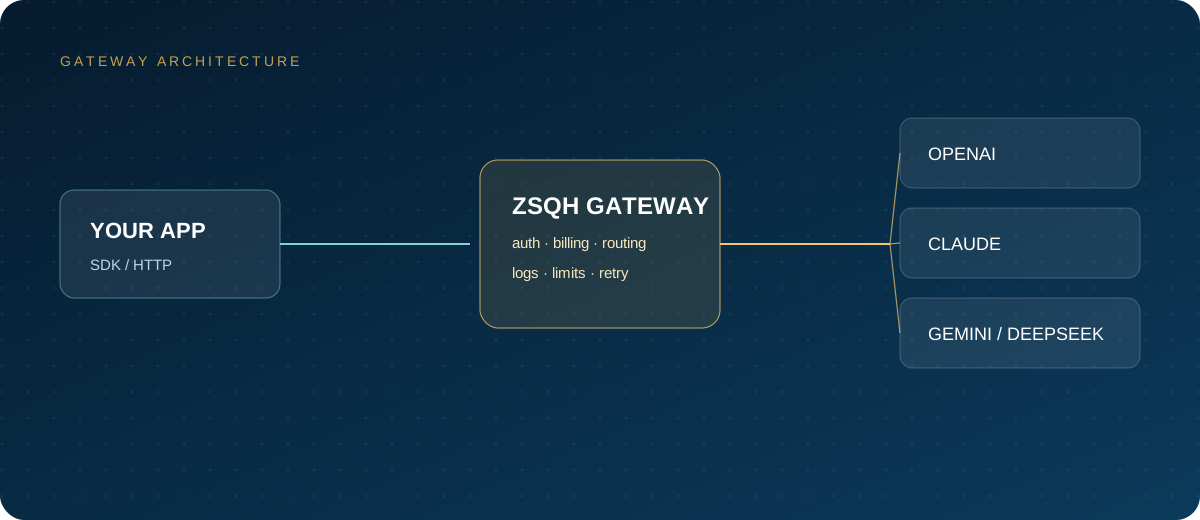
When accessing through a gateway or proxy, also confirm the upstream source, resale qualifications, data terms, and outage responsibility, and write notification and refund obligations for interruptions into the contract.
5. Data and privacy: six questions to ask
Video assets may contain faces, store interiors, and customer information. At minimum, clarify:
- Are uploaded images, videos, and prompts retained? For how long?
- Is data used for training or service improvement? Can that be disabled?
- In which region is data stored? Is it transferred across borders?
- Can a data processing agreement be signed, naming sub-processors and notification obligations?
- How are deletion requests executed, how long do they take, and can completion be evidenced?
- What are the notification deadline and handling process for security incidents?
Do not rely on verbal explanations. Archive and review the terms of service, privacy policy, data processing agreement, and security whitepaper. Trial environments should follow the same data classification; "it is only a test" is not a reason to upload real material.
6. Copyright and content safety: three lines of defense
Video content carries higher risk than text, and the program should have three layers of control:
- Asset layer: confirm the rights to use images, video, music, fonts, and trademarks. Obtain clear permission for real people's likenesses and keep source and license documents for customer assets. Where a platform offers a certification mechanism, bind the license to the asset ID.
- Generation layer: beyond platform moderation, the enterprise needs a prohibited-content list and spot checks. A moderation rejection is not a malfunction; do not bypass it by changing words or cropping.
- Publishing layer: brand or legal teams review ads and external assets before release to avoid mismatches with the physical product, third-party character likenesses, or misleading demonstrations.
Also confirm ownership and commercial scope of generated content; free-trial and paid terms may differ. Obtain permission first when film or television IP, celebrity likenesses, or other people's music are involved. For publication in China, also consider generated-content marking, deep synthesis, and advertising compliance requirements; legal determines how they apply.
7. Accounts, permissions, and keys
Do not register an enterprise account under an individual's name. Register with a corporate email and bind the legal entity, enable two-factor authentication for at least two administrators, and use separate keys for production, testing, and development. Store keys on the server or in a secrets management service, never in front-end code. Set quota alerts by project, revoke access immediately when an outsourcing engagement ends, and keep logs. Where sub-accounts are supported, apply least privilege and manage storage and callback secrets separately.
8. Storage, retention, and deletion
Video files are far larger than text, so design the storage strategy in advance:
- Result links expire, so transfer to your own storage as soon as possible after success;
- Set separate retention periods for final cuts, first frames, last frames, and failure samples;
- Use private buckets and signed URLs, and avoid public readability;
- Do not write personal information from prompts into logs;
- Establish a deletion process with an audit trail, and periodically clean up unreferenced files.
Retain enough for review; there is no need to keep everything indefinitely.
9. Stability, degradation, and backup channels
Video tasks are asynchronous, and queueing and timeouts are normal. Before launch, prepare:
- A persisted task table recording submission, status, latency, cost, and reference number;
- Separation of submission and polling with an overall timeout; exponential backoff for 429 and 5xx, no retries for 4xx;
- Idempotency keys to deduplicate and avoid duplicate submissions and charges;
- A backup model or channel with clear switch conditions;
- Degradation at peak times to low-resolution previews, still images, or template videos.
Read the SLA carefully: does it cover platform availability or per-task success rate? Is compensation in vouchers or cash? Clarify before signing.
10. A four-week pilot and acceptance
Complete an auditable pilot in four weeks:
- Set the scope: choose one scenario, and define asset licensing, data classification, acceptance metrics, and owners.
- Exercise the chain: complete authentication, submission, polling, transfer, retry, and reconciliation, accumulating 30–50 samples.
- Review quality and safety: business reviews usability, engineering reviews P95, legal reviews assets and terms, security reviews permissions and data flows.
- Run the numbers and decide: estimate the monthly budget from cost per usable clip, rework rate, and peak concurrency, then conclude whether to continue, narrow the scope, or stop.
The pilot report should include at least sample size, success rate, moderation rejection rate, P95 latency, and cost per usable clip.
FAQ
Does enterprise procurement of Kling require a contract?
When corporate payment, invoices, data terms, and service responsibility are involved, a contract is advisable. A personal account is suitable only for validation.
Can enterprise quota be split by project?
It depends on whether the platform supports sub-accounts, project budgets, or cost allocation. Include "per-project limits and per-business reconciliation" in the requirements, and confirm whether bills can be exported.
Who owns the copyright in generated video?
Follow the platform terms and the contract, subject to the licensing scope of the input assets. When third-party IP, likenesses, or music are involved, you still need to obtain permission yourself.
Are moderation rejections billed?
Rules differ. Before purchasing, confirm how moderation rejections, timeout cancellations, and system failures are billed, and validate this during the pilot rather than relying on a sales description.
How can monthly video generation costs be controlled?
Set budgets and alerts by business line, and measure cost per usable final cut. Reducing wasted retries and improving first-pass yield is usually more effective than switching vendors.
Next steps
Confirm accounts, quota, data, and contracts against the checklist first, then exercise the chain with a small sample. If you need unified key, usage, and billing management, create an account at the ZSQH AI Gateway and check available models and billing methods on the model pricing page.
Related reading: