Many teams want Midjourney's visual style, but integration starts with a premise they must accept: it has no general public API for developers. Services named "Midjourney API" on the market are essentially a wrapper layer on top of the official product.
That means you are not choosing an official interface but an intermediary and its upstream. This article compares several common routes, explains payment, stability, compliance, and copyright risks, and provides due-diligence and validation checklists.
Note: Midjourney is a trademark of Midjourney, Inc., and other product names mentioned are trademarks of their respective owners. This article has no affiliation or partnership with Midjourney; API availability is subject to official announcements, and this article does not constitute legal advice.
1. Confirm One Fact First: There Is No General Public API
As of October 2026, Midjourney's official usage is still mainly the Discord bot and the web version. Its official updates page has shown survey information about interest in an enterprise API, but a general public API for all developers has not opened; the specific scope and timing are subject to official announcements.
A simple judgment follows: any "Midjourney API key" a vendor gives you is not a developer credential issued by Midjourney, but a key for that vendor's own system. That does not mean it cannot be used, but it means stability, compliance, and responsibility all rest with this intermediary layer.
2. Four Common Routes in China
The difference is not "whether images can be generated" but control, cost, and where risk sits.
| Route | Essence | Advantages | Main risks |
|---|---|---|---|
| Manual use of the official product | Operate in Discord or the web after subscribing | Clear terms | No automation; high labor cost |
| Third-party account-pool interface | Vendor maintains accounts and submits automatically | API shape; per-task billing | Account-pool volatility, queueing, terms risk |
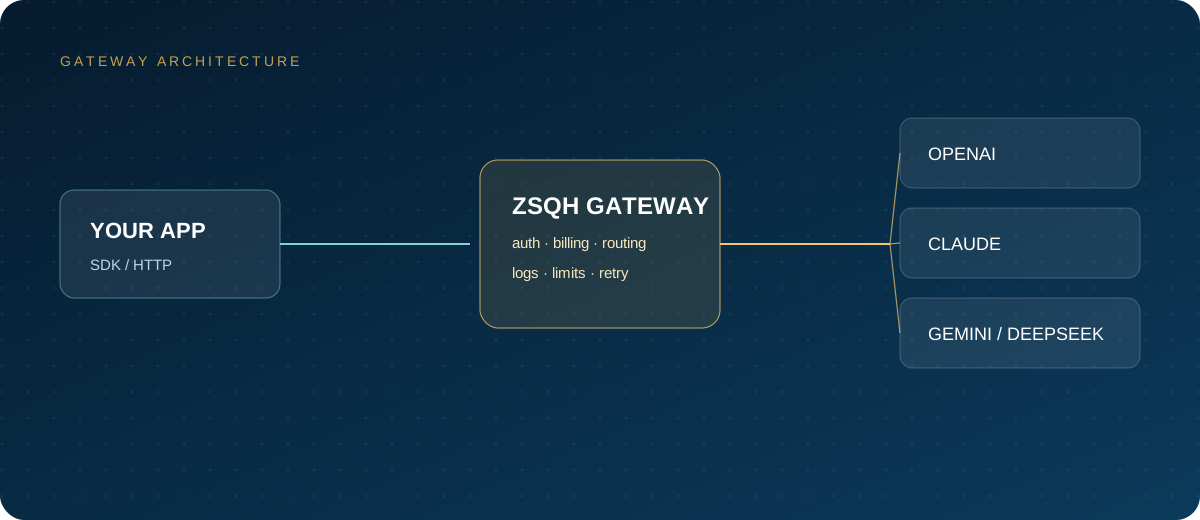
| Aggregation gateway | One entry point for multiple models | Easy switching; RMB settlement | Middle-layer failures; opaque status and billing |
| Self-built automation | You control the accounts and scripts | More control | You bear operations, bans, and terms risk |
For occasional images, manual use of the official product is simplest. For production workflows, you must trade off between third-party interfaces and alternative models.
3. How Third-Party Interfaces Are Usually Implemented
There are three common implementations: maintain a set of Midjourney accounts and submit through automation; wrap web operations; or resell upstream quota. In every case, your requests pass through the other party's accounts, queues, and storage.
This has several direct consequences. First, your tasks share concurrency with other customers, so queue times lengthen noticeably at peak hours. Second, if the account pool triggers risk controls or a ban, the interface may become entirely unavailable, and recovery time is outside your control. Third, generated images may enter a public community feed, depending on subscription tier and settings, and the vendor may not explain this. Fourth, prompts, reference images, and outputs all pass through a third party, so data retention and use need separate confirmation.
When evaluating, ask clearly about account sources, concurrency caps, queueing, and compensation for bans.
4. Payment, Contracts, and Invoices
Official subscriptions usually require overseas payment, which is the main reason teams in China turn to third parties. Third parties generally accept RMB and support corporate transfer or online payment, but contracts and invoices vary widely.
Before purchasing, confirm at least five things: who signs the contract, the settlement currency, what invoice can be issued, the refund rules, and the validity period of prepaid balances. Personal transfers and "customer service" contacts without a contracting entity are unsuitable for production; if service stops, accountability and reimbursement become difficult.
Also do not treat "low unit price" as the only metric: image tasks involve failures and retries, and real cost should be calculated per usable image. Fees for other models on the site are subject to model pricing, and prices change with upstream adjustments.
5. Stability: Image Tasks Differ From Text Interfaces
Image generation is an asynchronous task: after submission it enters a queue, and the result is returned only when generation finishes. In a relay chain, task ID persistence, status mapping, and result storage are all more error-prone than with text interfaces.
When testing, do not send only "a cat." Use real business prompts covering reference images, upscales, and variations, and record success rate, queue time, generation latency, and download success rate. Focus on three anomalies: a submission times out but the upstream actually created the task, so a retry produces two copies; a moderation rejection is mapped to an ordinary failure, so the business retries forever; a result link expires, so the task shows success but the image will not open.
In production, keep a mapping between business reference numbers and task IDs, copy images to your own storage immediately after download, and do not depend long-term on the vendor's temporary links.
6. Compliance, Copyright, and Account Risk
The first layer is platform terms. Midjourney's terms of service explicitly restrict automated access, account sharing, and resale, and third-party wrappers may touch these clauses, leading to account or service suspension. Before signing, have legal read the official terms in force at that time, and write "what happens if the upstream is banned" into the contract.
The second layer is content and copyright. Whether generated images can be used commercially, whether they are publicly visible, and how copyright is assigned depend on the subscription tier and the terms in force, and the latter may set different requirements by revenue scale. When likenesses, brand marks, or the style of existing works are involved, perform an additional rights review.
The third layer is domestic compliance. Providing generative AI services to the public may involve service filing, content labeling, and personal information protection requirements; cross-border data transfers require a separate assessment. The current regulations govern the specifics.
7. Vendor Due-Diligence Checklist
Send the following eight questions to candidate vendors and require written answers; downgrade any vendor that is vague.
- Is the upstream a self-operated account pool, a partner channel, or a second-hand resale? What is the concurrency cap?
- Who is the contracting entity, can it issue a VAT invoice, and what are the refund rules?
- How long are task records retained, are result images stored on your behalf, and how long do temporary links last?
- How are failures, timeouts, moderation rejections, and cancellations billed?
- Can keys limit quota, IP, and expiry, and how are they disabled after a leak?
- Are prompts and outputs written to disk, used for training, and can a data processing agreement be signed?
- What is the historical availability, and what are the incident notification and response times?
- At termination, how are task records and images exported?
8. How to Validate Before Launch
Validate with real tasks before signing, not just with a demo account. The script below is only a skeleton; paths and fields are subject to the vendor's documentation.
# Paths and fields are subject to the vendor's documentation
curl -sS -X POST "$MJ_BASE_URL/v1/images/generations" \
  -H "Authorization: Bearer $MJ_API_KEY" \
  -H "Content-Type: application/json" \
  -d '{"prompt":"a white egret on a shallow shore at dawn, product photography style","async":true}'

# Record the returned task_id, then query the status
curl -sS "$MJ_BASE_URL/v1/tasks/$TASK_ID" \
  -H "Authorization: Bearer $MJ_API_KEY"
Then do four things: submit 20 to 50 tasks concurrently and observe queueing and failures; submit a task and cancel it immediately to see the status and billing; send a wrong parameter to see whether the error message is readable; access the result link after 24 hours and check the task record after seven days. Discuss a contract only after all four pass.
9. If the Risk Is Unacceptable, Switch Image Models
If account-pool risk, data terms, or cost are unacceptable, there are many alternatives: domestic cloud providers generally offer text-to-image interfaces such as Tongyi Wanxiang, Seedream, Hunyuan Image, and CogView; internationally, there are image models from OpenAI and Google, as well as the Flux and Stable Diffusion families on cloud platforms; teams with engineering capacity can also self-host open-source models.
Do not assume the results are "about the same." Run a blind test with the same prompt set, focusing on style consistency, Chinese text rendering, commercial terms, and data storage location. Reserve Midjourney for scenarios that most need its style and assign other batch tasks to models with more controllable costs.
FAQ
Does Midjourney have an official API?
As of October 2026, there is no general public API; official channels are mainly Discord and the web version, and enterprise interfaces are subject to official announcements. Third-party "APIs" are all wrappers on top of the official product.
Why might a third-party Midjourney API lead to a ban?
Automated access and account sharing may violate the terms of service, and a banned account pool will affect your tasks. Do not treat "it works now" as "it will work long-term"; ask about compensation after a ban before signing.
Can domestic payments come with invoices?
It depends on the vendor entity and the contract. Confirm the settlement currency, invoice type, refund rules, and balance validity, and avoid relying on personal transfers for production business.
Who owns the copyright to generated images?
It depends on Midjourney's terms and the subscription tier. Before commercial use, check public visibility, enterprise revenue thresholds, and redistribution restrictions, and perform a separate review when likenesses or trademarks are involved.
How do I judge whether an interface is stable?
Load-test with real tasks and measure success rate, queue time, and download success rate; re-check results and task records after 24 hours and seven days. A fast demo account does not mean production readiness.
Next Steps
If the risk and cost do not fit, you can create a test key at the ZSQH AI Gateway and compare alternative image models through a unified entry point; available models and fees are subject to model pricing, and prices change.
Related reading: